
Building Climate-Resilient Cocoa Production While Eliminating Child Labour: Key Lessons from the CLIMATE COCOA Project
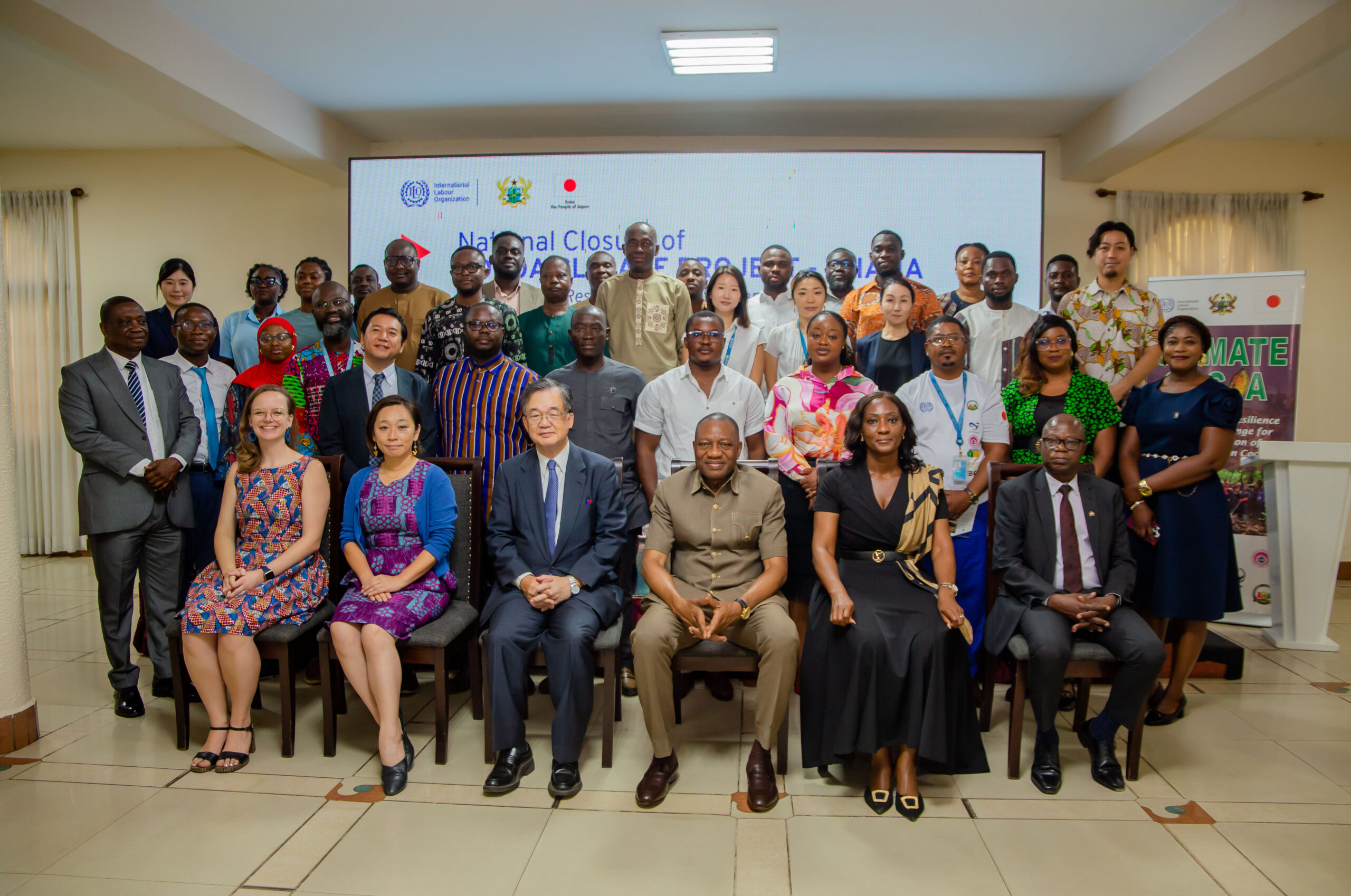
The International Labour Organization (ILO), in partnership with the Government of Ghana and with financial support from the Government of Japan, successfully concluded the CLIMATE COCOA Project at a national closure event held on 5th March 2026 at the Coconut Grove Hotel in Accra. The event brought together senior government officials, development partners, diplomatic representatives, and stakeholders across Ghana’s cocoa value chain to review the project’s outcomes. Opening remarks by the Director of ILO Country Office for Nigeria, Ghana, Liberia, Sierra Leone and the Liaison Office for ECOWAS were followed by a statement from the Japanese Ambassador to Ghana and a keynote address by the Minister for Labour, Jobs and Employment, reflecting strong national and international commitment to addressing child labour and sustainable agricultural development.
Implemented in cocoa-growing communities in the Bibiani Ahwianso Bekwai Municipal area of the Western North Region, the project adopted an integrated approach that simultaneously addressed child labour prevention, climate resilience, and farmer livelihoods. Through the establishment and strengthening of Child Labour-Free Zones, communities were supported to improve monitoring and referral systems for child protection, resulting in the identification and remediation of 218 children involved in child labour. Complementary interventions also improved access to education through the construction of school infrastructure, provision of bicycles and learning materials, and strengthening of local child protection committees.
A notable innovation of the project was the promotion of biochar technology, a climate-smart agricultural practice produced from cocoa pod husks that enhances soil fertility, increases crop yields, and reduces production costs. Hundreds of farmers were sensitized on the use of biochar, demonstration farms were established, and practical guidelines were developed to support wider adoption. These interventions demonstrated that strengthening farm productivity and climate resilience can directly reduce economic pressures that often contribute to child labour in rural communities.
For employers and agribusinesses operating within Ghana’s cocoa sector, the project highlights the growing importance of integrating responsible labour practices with sustainable production systems. As global markets increasingly emphasize environmental, social, and governance (ESG) standards within agricultural value chains, initiatives such as the CLIMATE COCOA Project illustrate how collaborative action between government, employers, workers, and development partners can deliver both social protection outcomes and productivity gains. The lessons emerging from the project provide a valuable reference point for scaling climate-smart agriculture and strengthening due diligence frameworks to ensure that Ghana’s cocoa industry remains competitive, sustainable, and free from child labour.